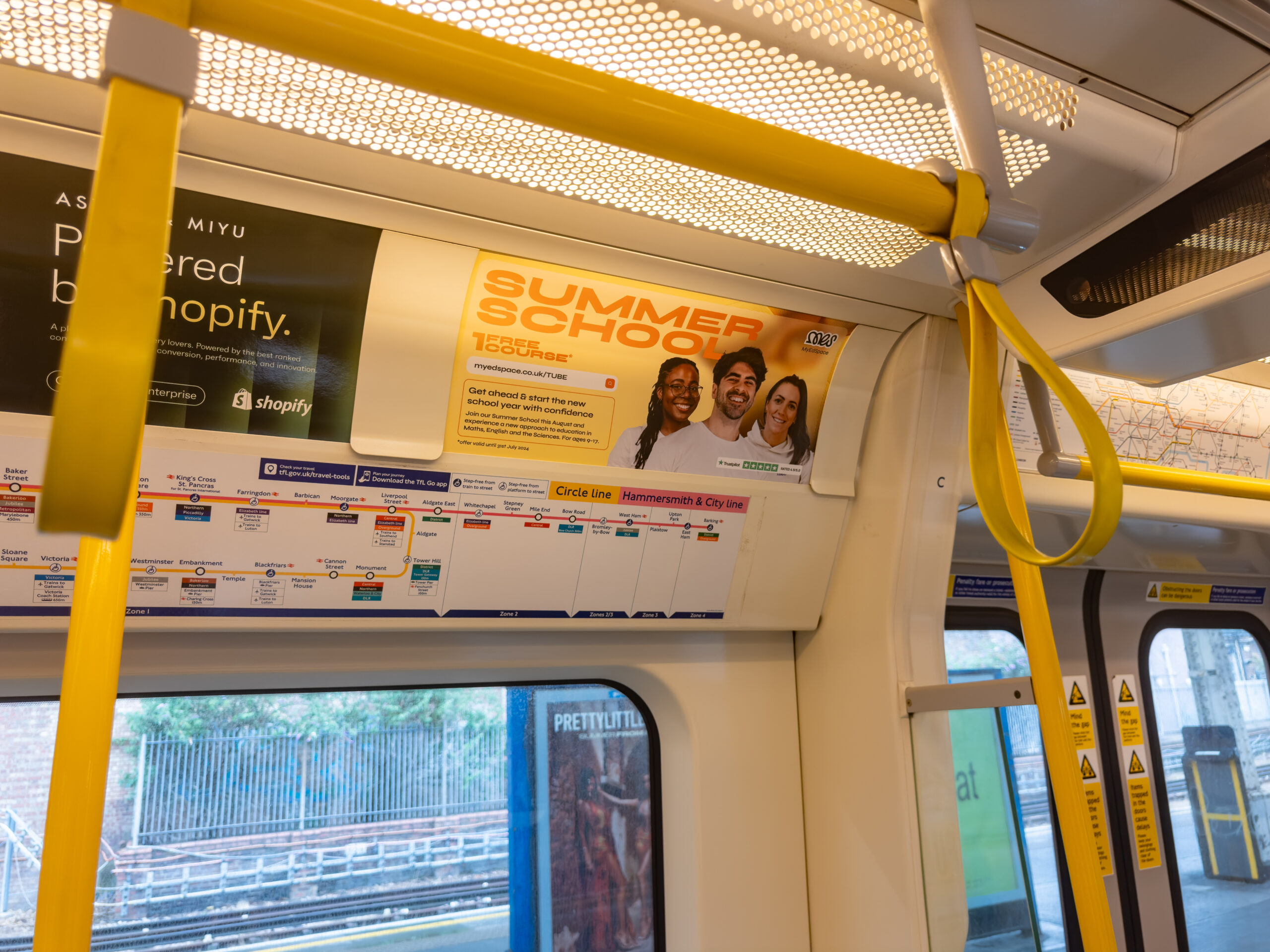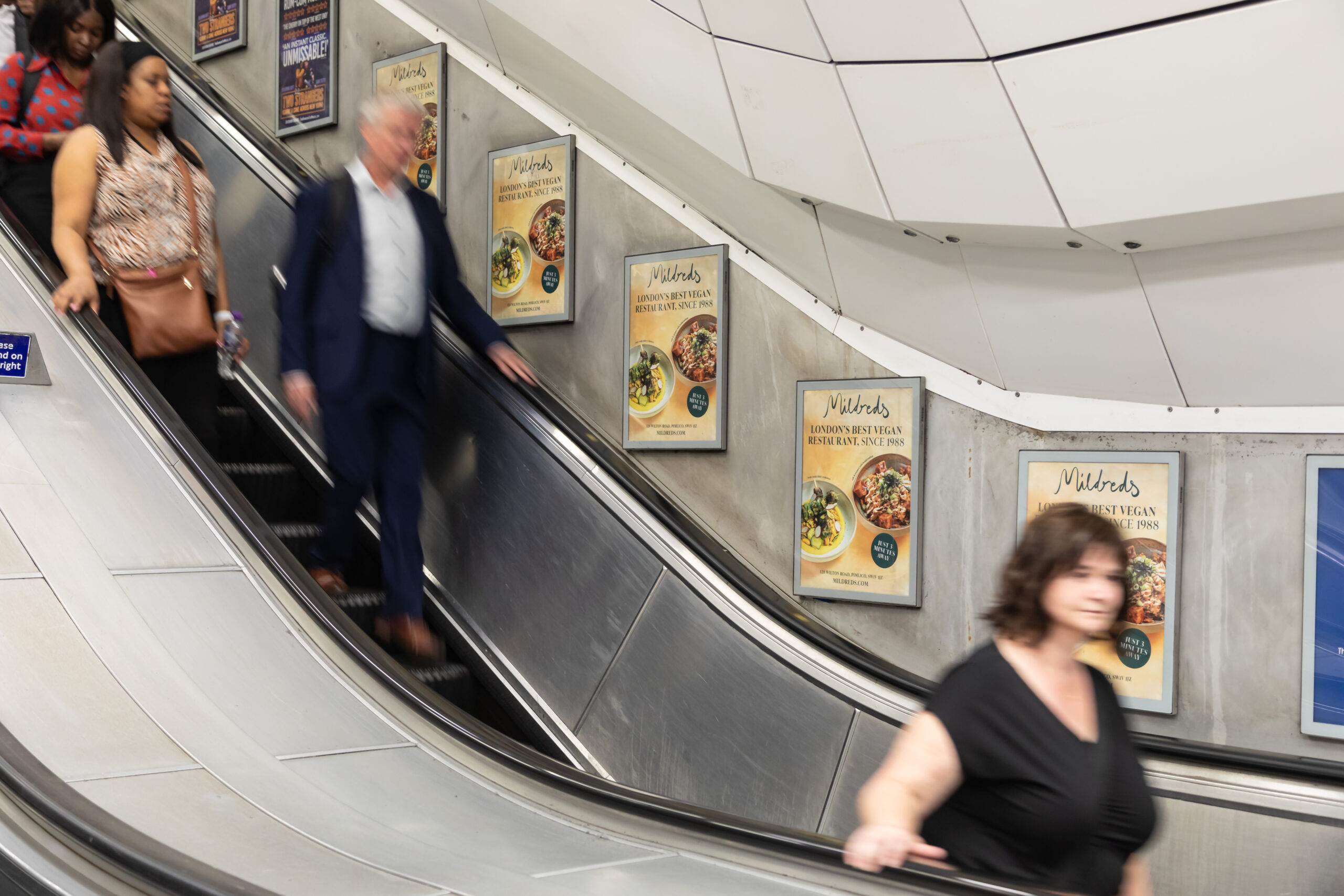
Escalator Panels (these are also known as London Escalator Panels or LEPS) – they are the posters that you see at the side of the escalator as you travel to and from the train stations and tube platforms. Available in most major stations.
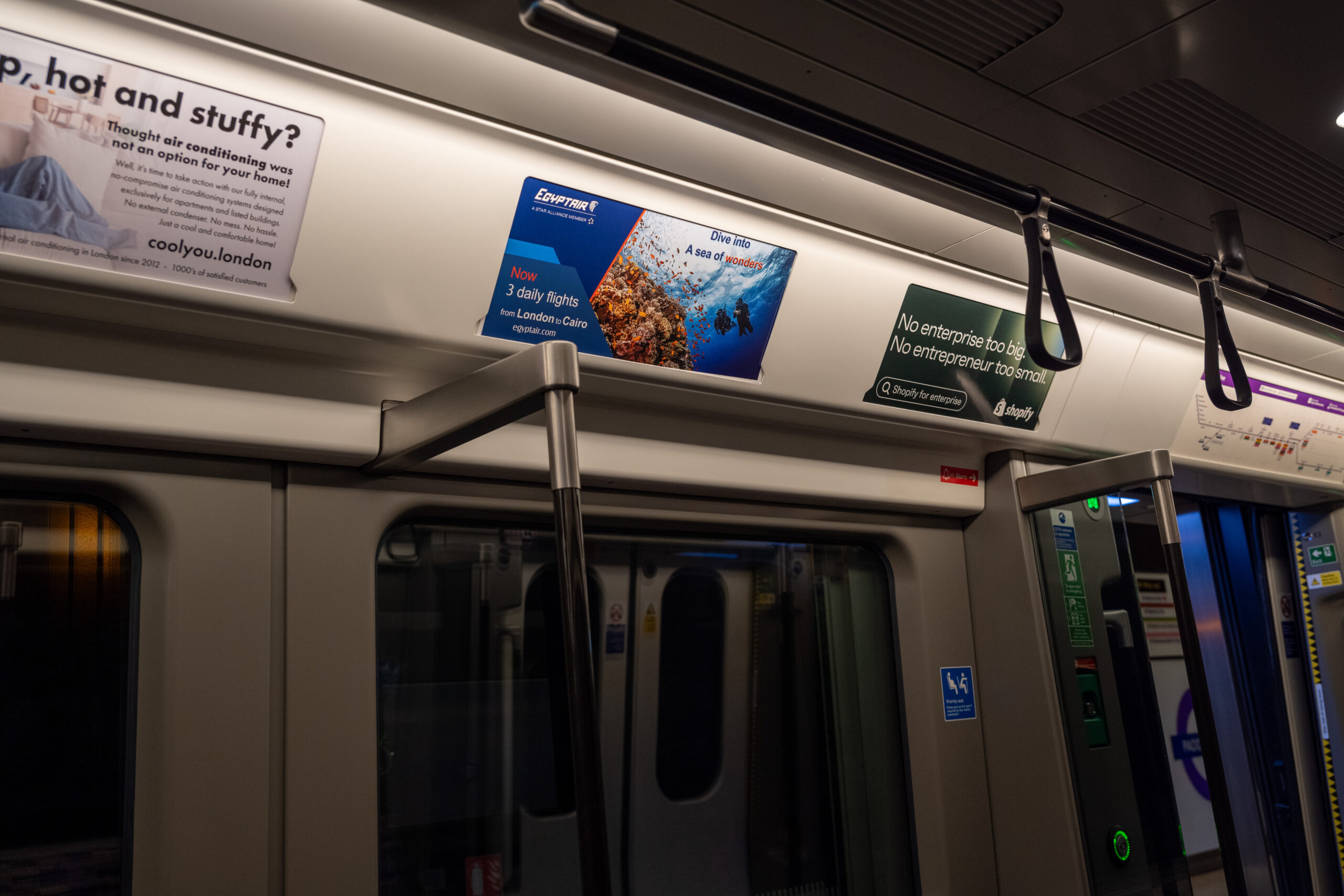
Tube car panels, also known as train car panels, are ads displayed on the interior of trains on the London Underground. They benefit from an average dwell time of of 21 minutes.
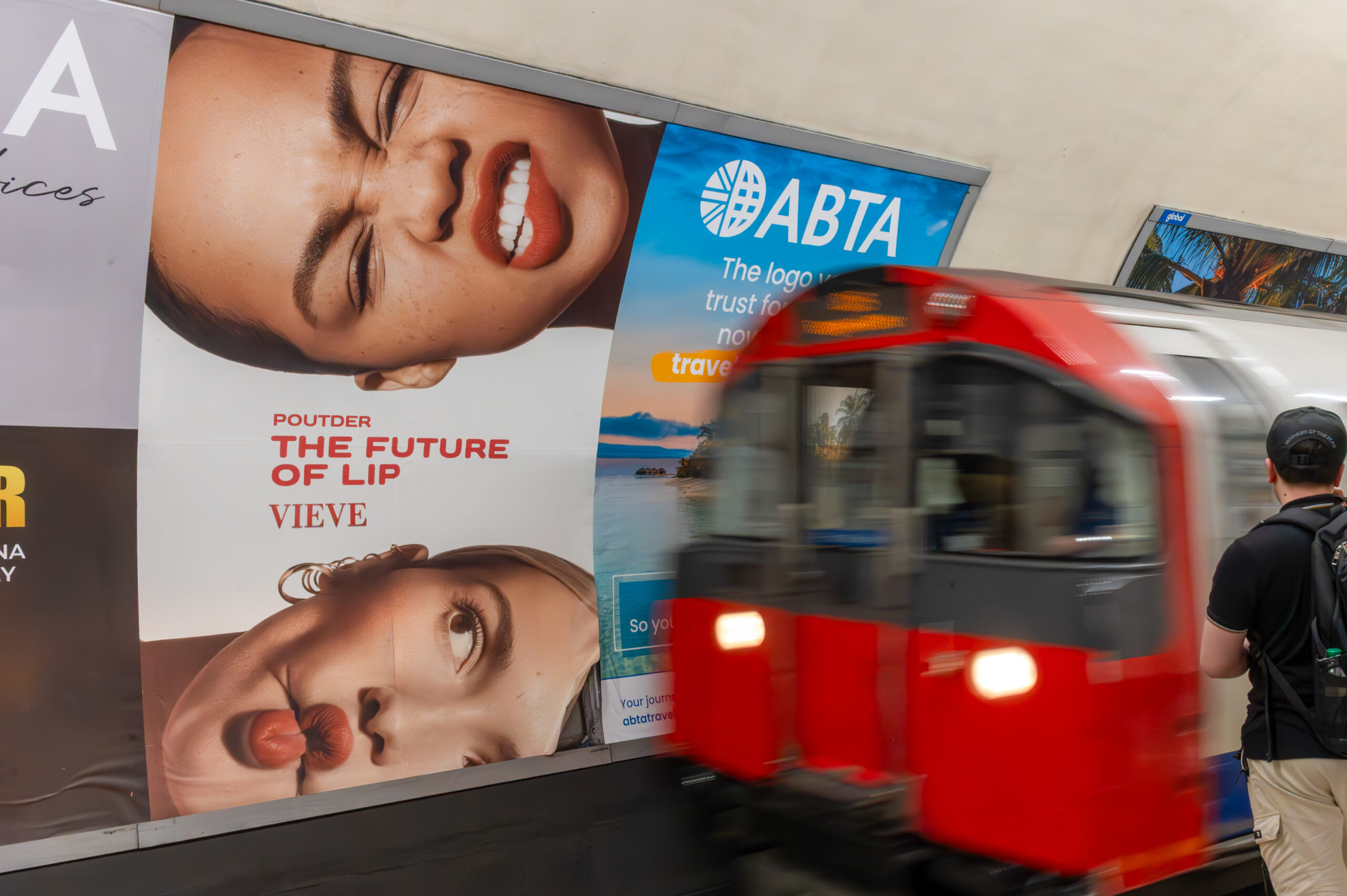
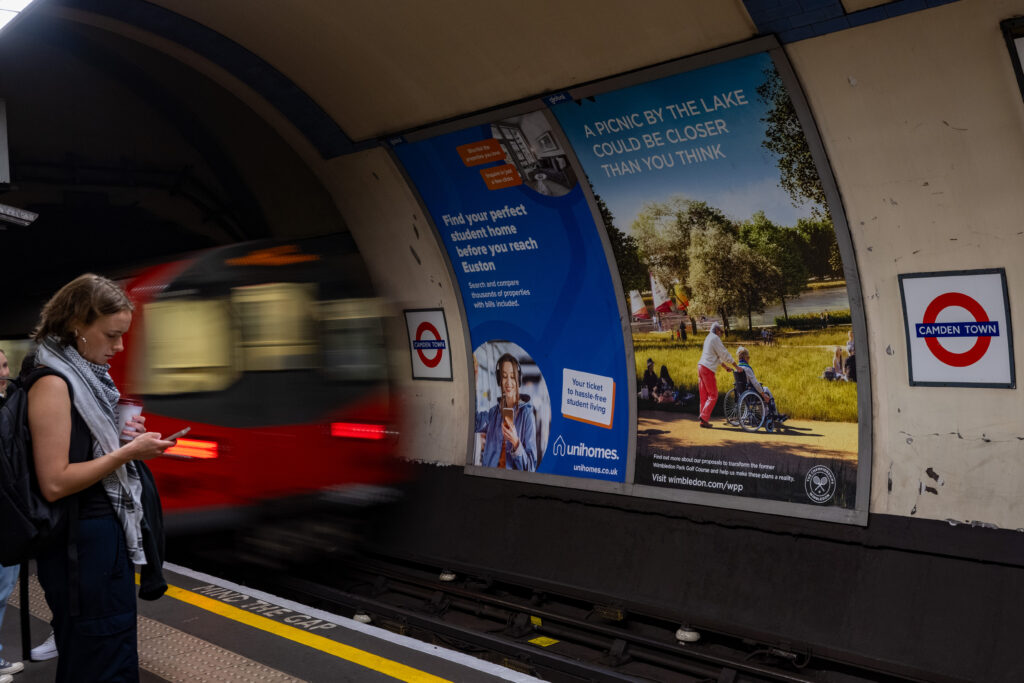
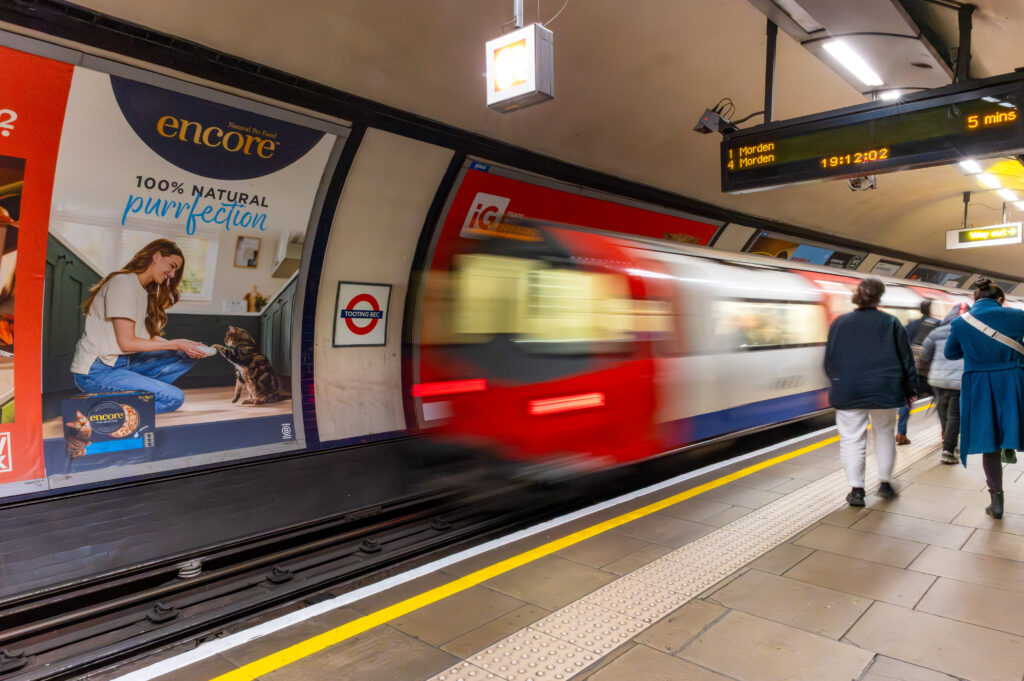
A cross track poster on the London Underground is a large poster that is displayed on the walls of the tunnel across from the platform. These posters offer a highly visible way to reach a large audience of commuters and travellers as they wait for their train.
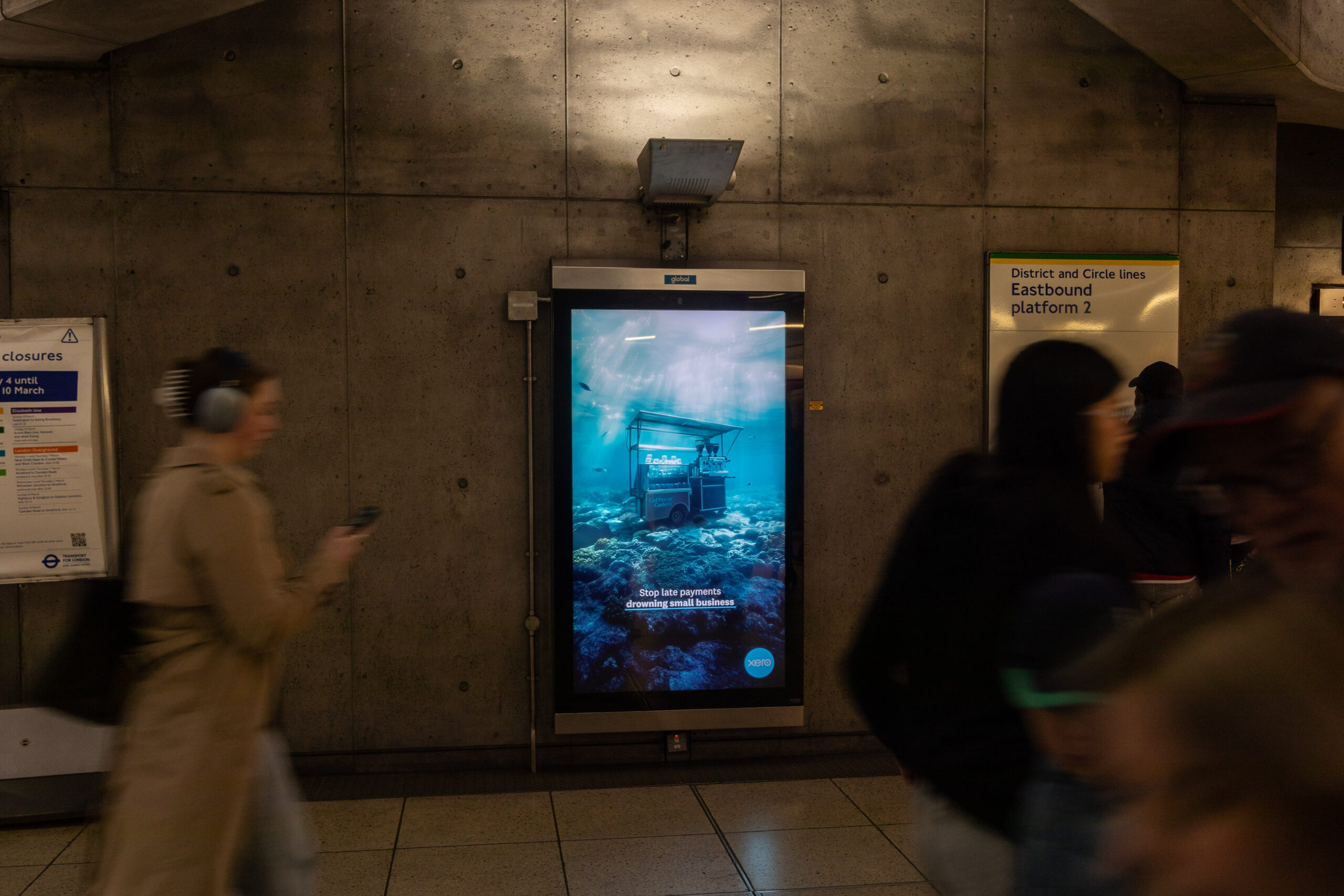
Digital screens on the London Underground offer dynamic, high-impact advertising in key stations across the network. With the ability to run motion creative and update messaging quickly, they are ideal for brands seeking flexible, high-visibility exposure in high-traffic commuter environments.
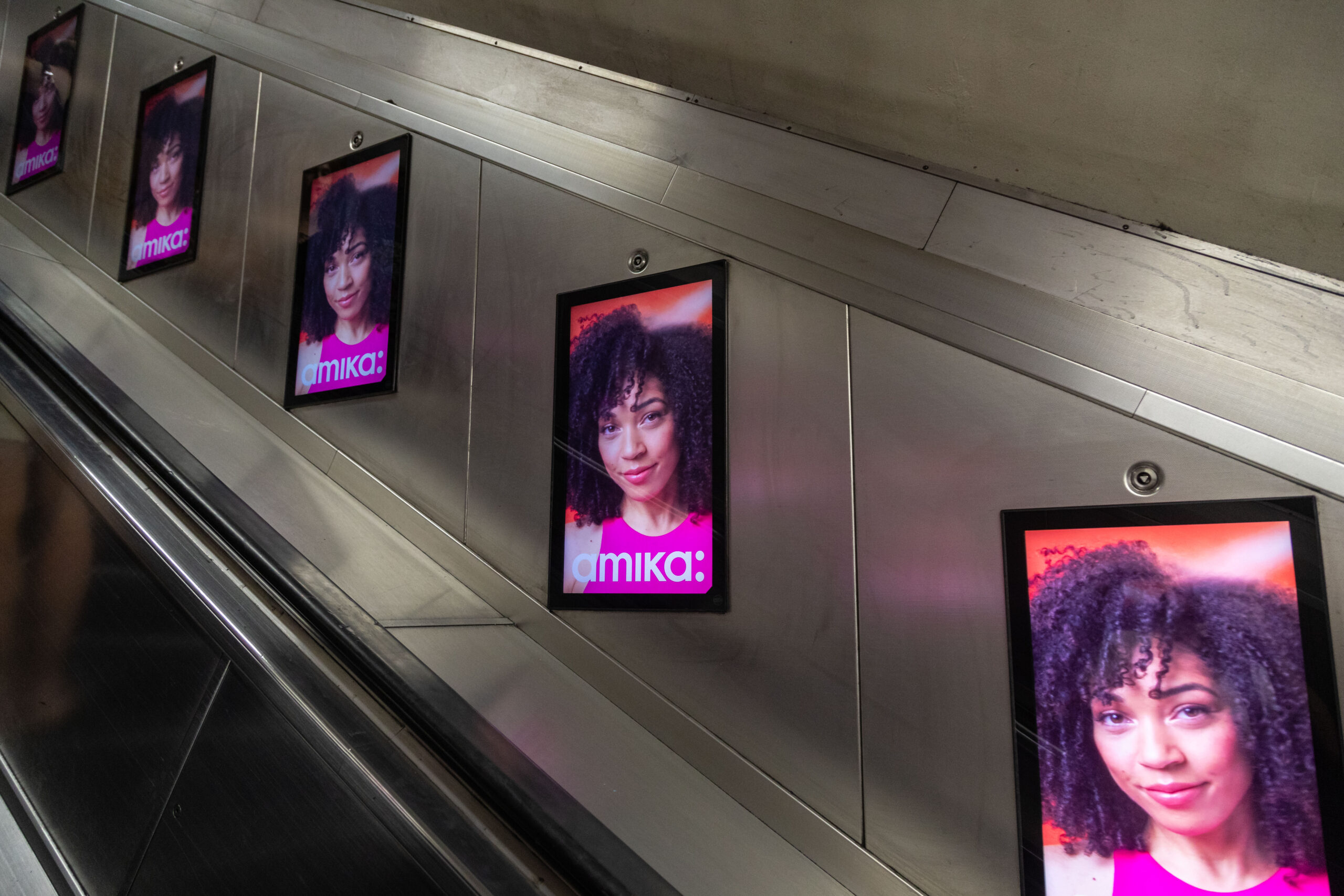
Digital Escalator Panels are ideal for delivering captivating advertising messages. They can synchronise creative content with the environment to enhance the brand’s presence.
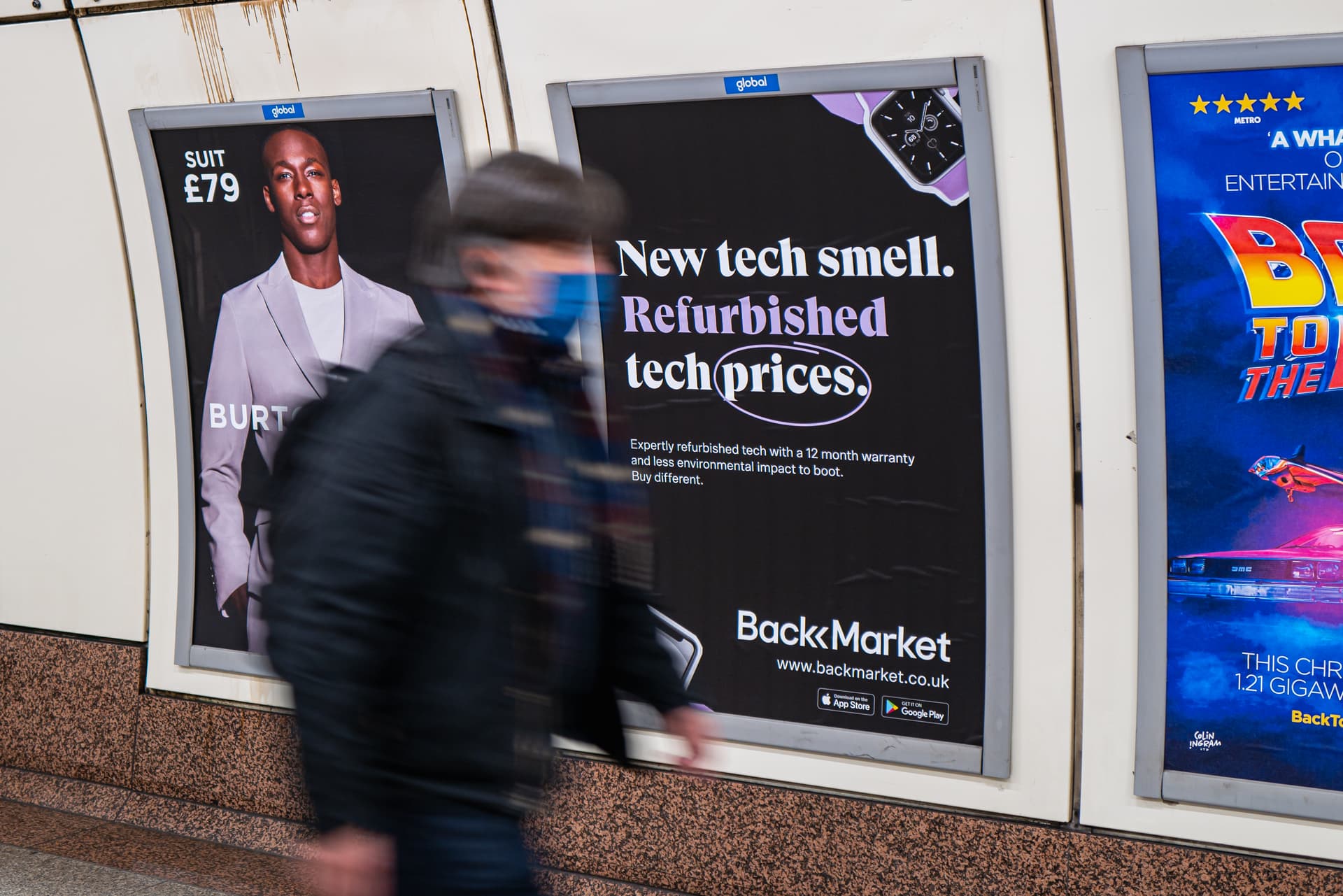
Paper posters reach a large audience and increases the frequency of your advertisements within the underground. These large posters are displayed in high-traffic areas of the station, providing maximum visibility for your brand.
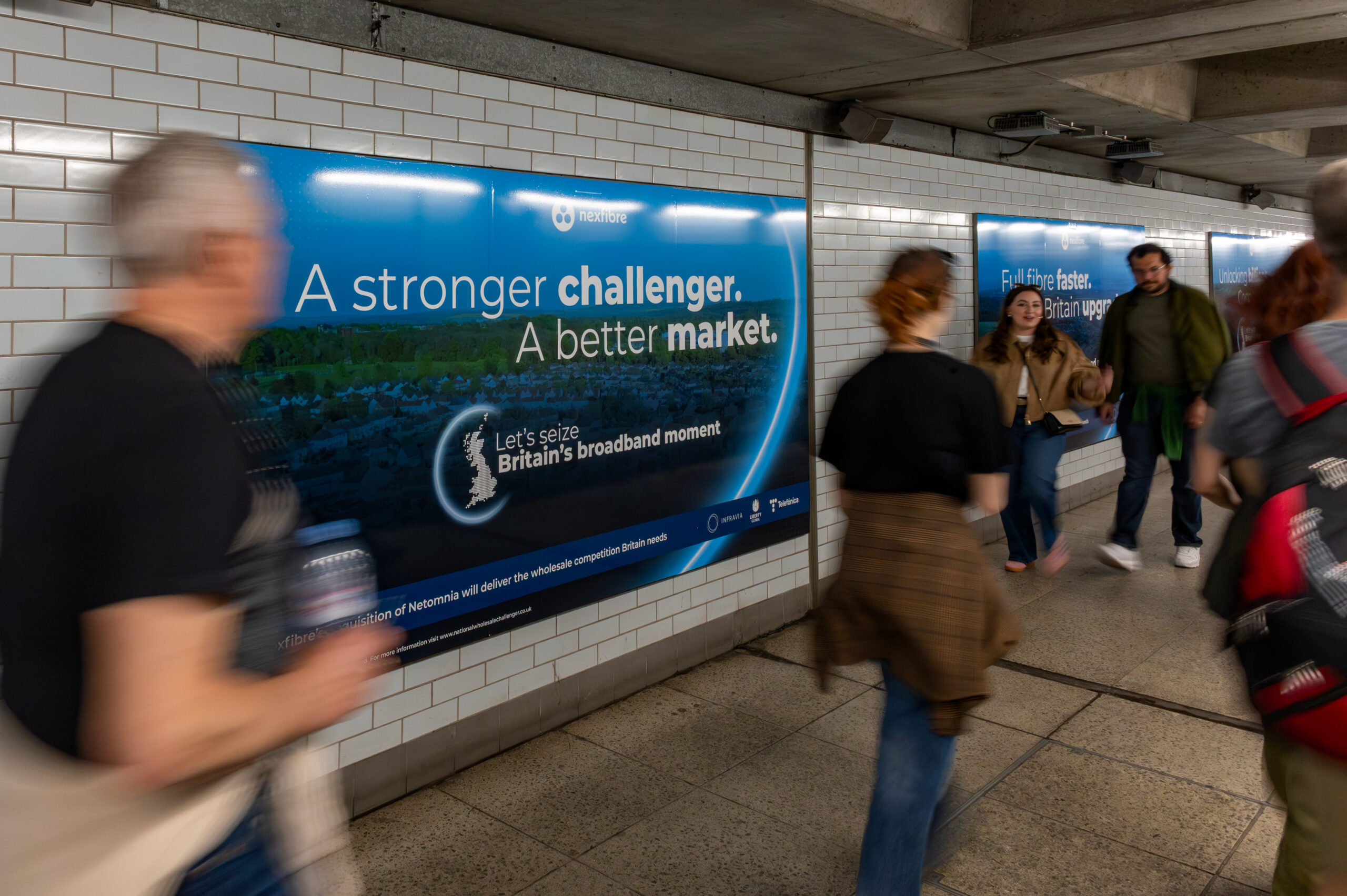
Station domination transforms an Underground station into a fully branded environment using a combination of posters, digital screens, escalator panels and other formats. It's ideal for brands looking to maximise impact and own the passenger journey.
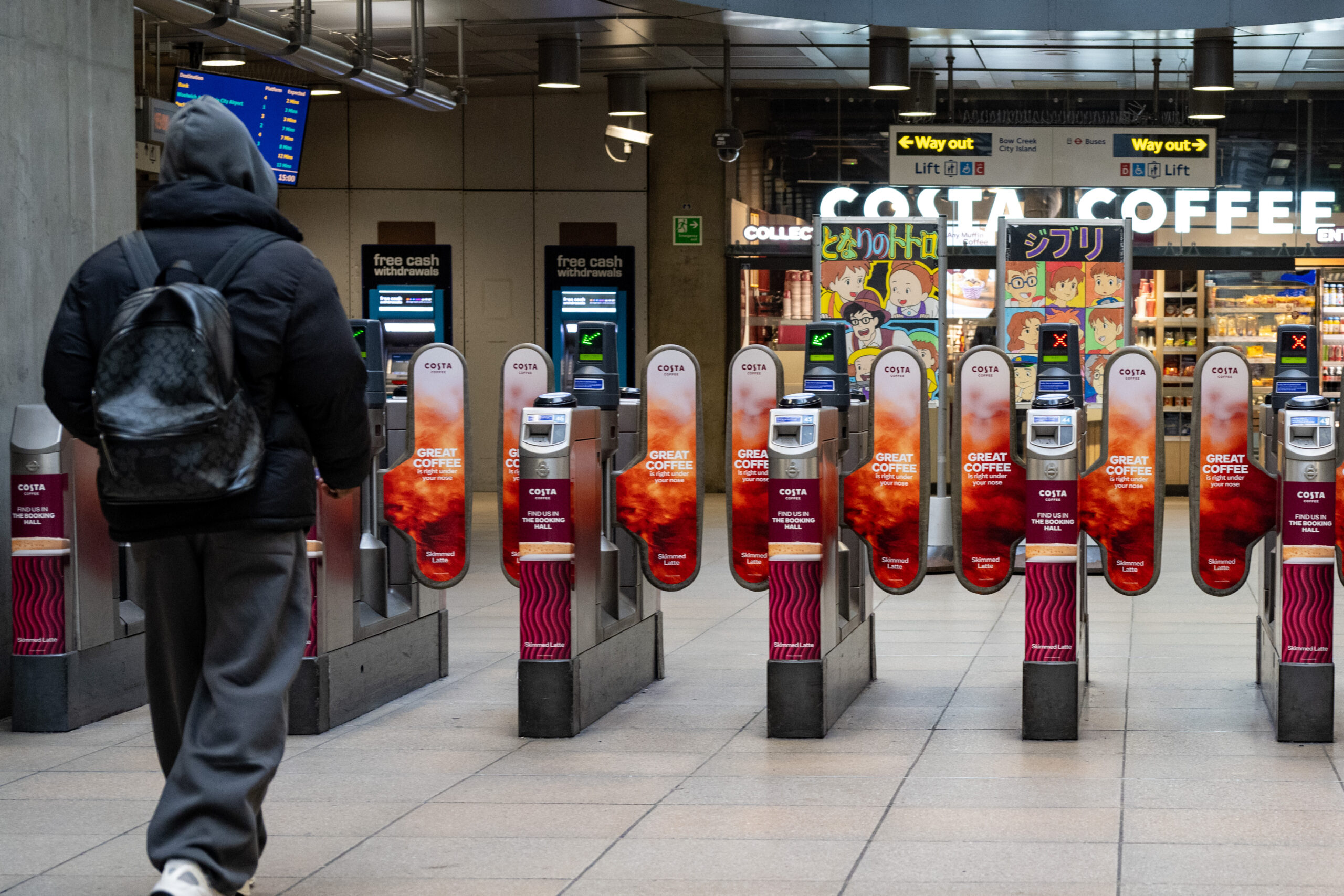
Ticket gate advertising places your brand around the barriers passengers pass through when entering and leaving the station. These high-frequency placements deliver repeated exposure in busy commuter environments.
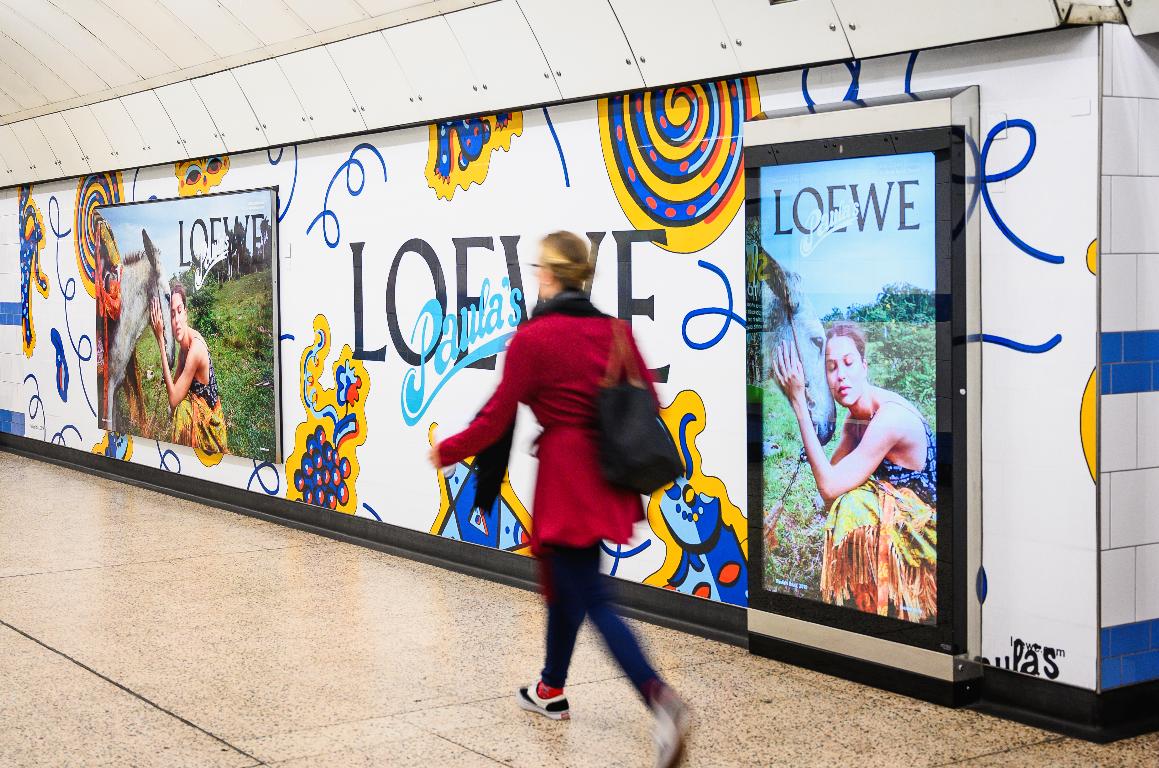
Digiwall takeovers use large-format digital screens to deliver immersive, high-impact campaigns in some of London's busiest Underground stations. Motion creative and premium positioning make them ideal for major product launches and brand campaigns.
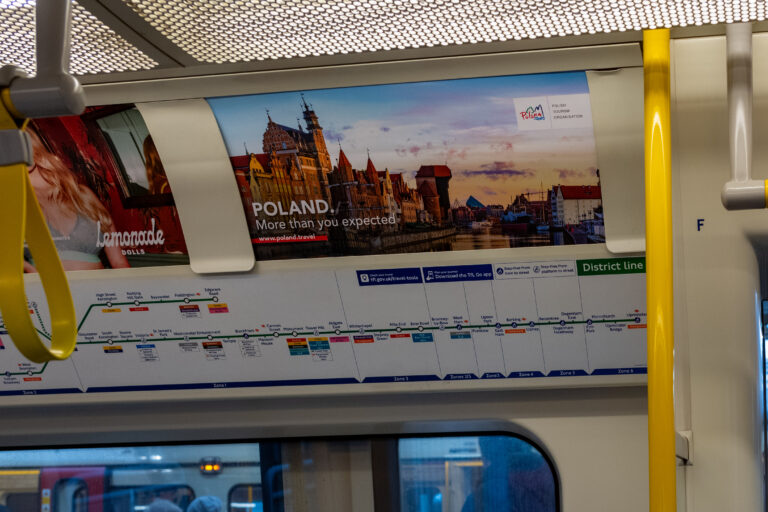
Polish Tourism
Polish Tourism London Underground Advertising Case Study The Polish Tourism Organisation partnered with Excite OOH to deliver a high-impact London Underground advertising campaign. Combining Cross
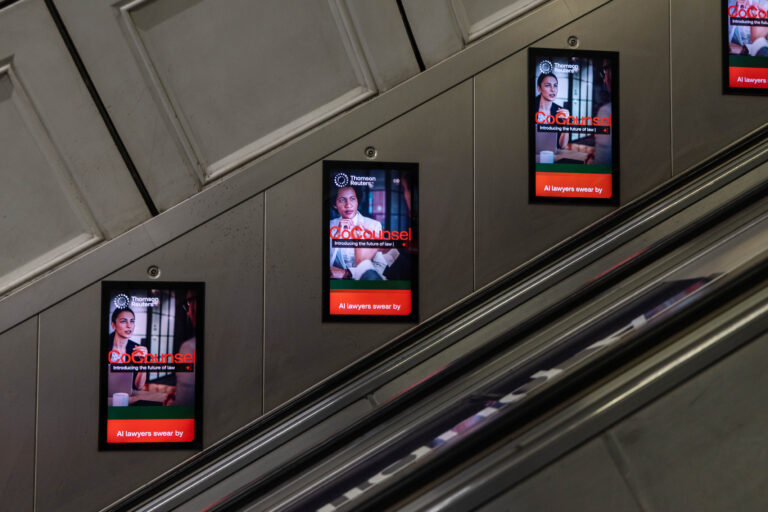
Thomson Reuters
Discover how Excite OOH helped Thomson Reuters promote Legal Geek 2025 through a targeted London Underground advertising campaign, combining premium digital formats to reach legal professionals travelling to the event.
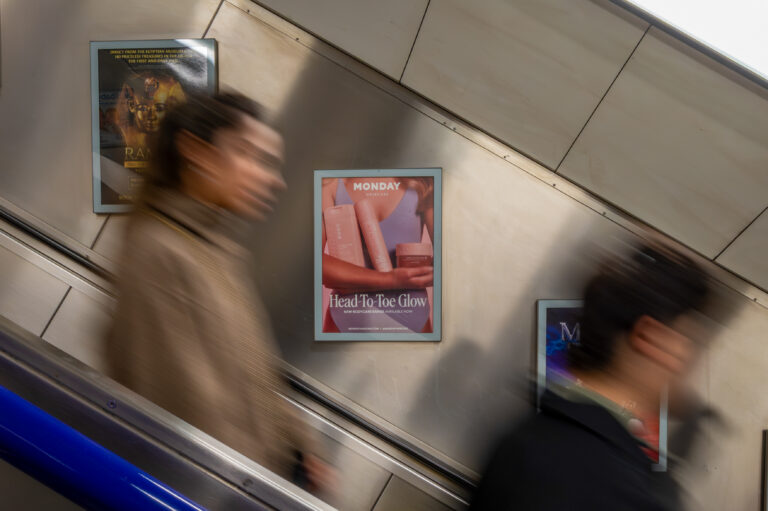
Monday Haircare
Discover how Excite OOH helped MONDAY Haircare launch its Head-To-Toe Glow range with a London Underground advertising campaign across premium stations, reaching thousands of commuters every day.