If you’ve searched “how much does billboard advertising cost?” and come away more confused than when you started, you’re not alone.
In the UK, billboard advertising prices can range from a few hundred pounds a week to several thousand, and the reason for that gap isn’t always obvious. We plan and buy billboard campaigns across the UK every week, and this guide explains what billboard advertising actually costs in the real world, not just what rate cards suggest.
Whether you’re budgeting for your first outdoor campaign or sense-checking figures you’ve already been quoted, this article is designed to give you realistic expectations.
How much does billboard advertising cost in the UK?
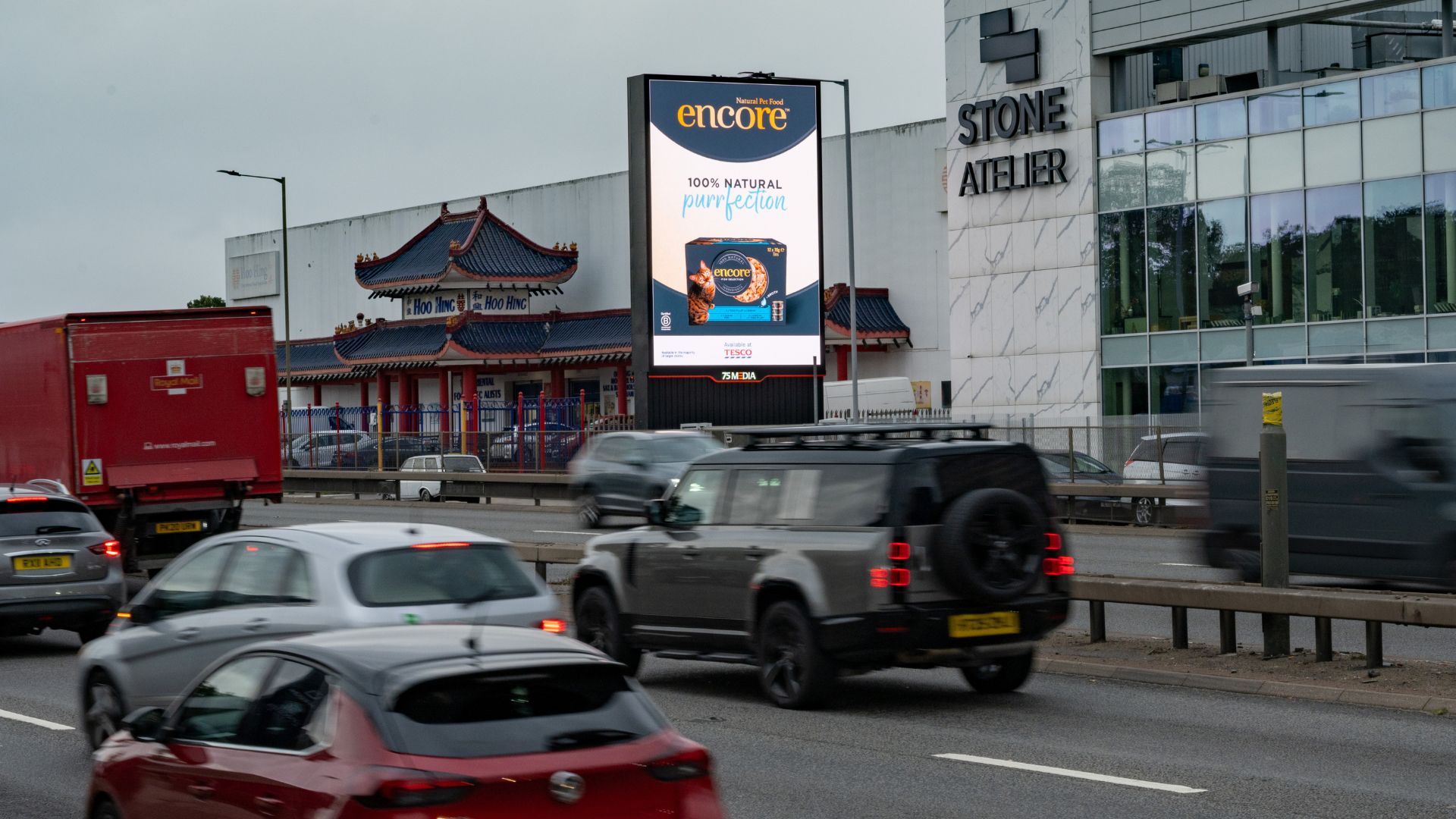
In practical terms, billboard advertising in the UK typically costs between £200 and £5,000+ per week.
That’s a wide range, but it reflects how varied billboard sites really are. As a general rule:
£200–£800 per week usually buys a smaller static billboard on a local or regional road
£1,000–£3,000 per week is common for strong city sites and high-traffic urban locations
£2,000–£5,000+ per week tends to apply to premium digital screens and large-format billboards in major cities
While prices are usually quoted per week, most billboard campaigns are booked in two-week blocks as a minimum. This means a typical starting budget is often double the weekly figure, even for shorter test campaigns.
These figures refer to media space only, not design or production, and assume standard availability.
Why billboard advertising prices vary so much
One of the reasons billboard costs feel opaque is that you’re rarely buying a single, standardised product. Two billboards that look similar on a map can perform very differently once traffic, visibility and dwell time are factored in.
Pricing is shaped by a combination of demand, availability and audience exposure, which means cost is always contextual.
What actually affects billboard advertising costs?
Location
Location is the biggest driver of price.
Billboards in:
Central London
Major commuter routes
Motorways and trunk roads
Dense city centres
will always cost more than similar formats in quieter areas. London sites in particular can cost 30–100% more than equivalent placements elsewhere in the UK.
That doesn’t mean regional billboards are less effective, they’re often better value, but the audience scale is different.
In some cases, billboard pricing is also influenced by planning and advertisement consent requirements, particularly for new or digital sites.
Format
Format influences cost, but not always in the way people expect.
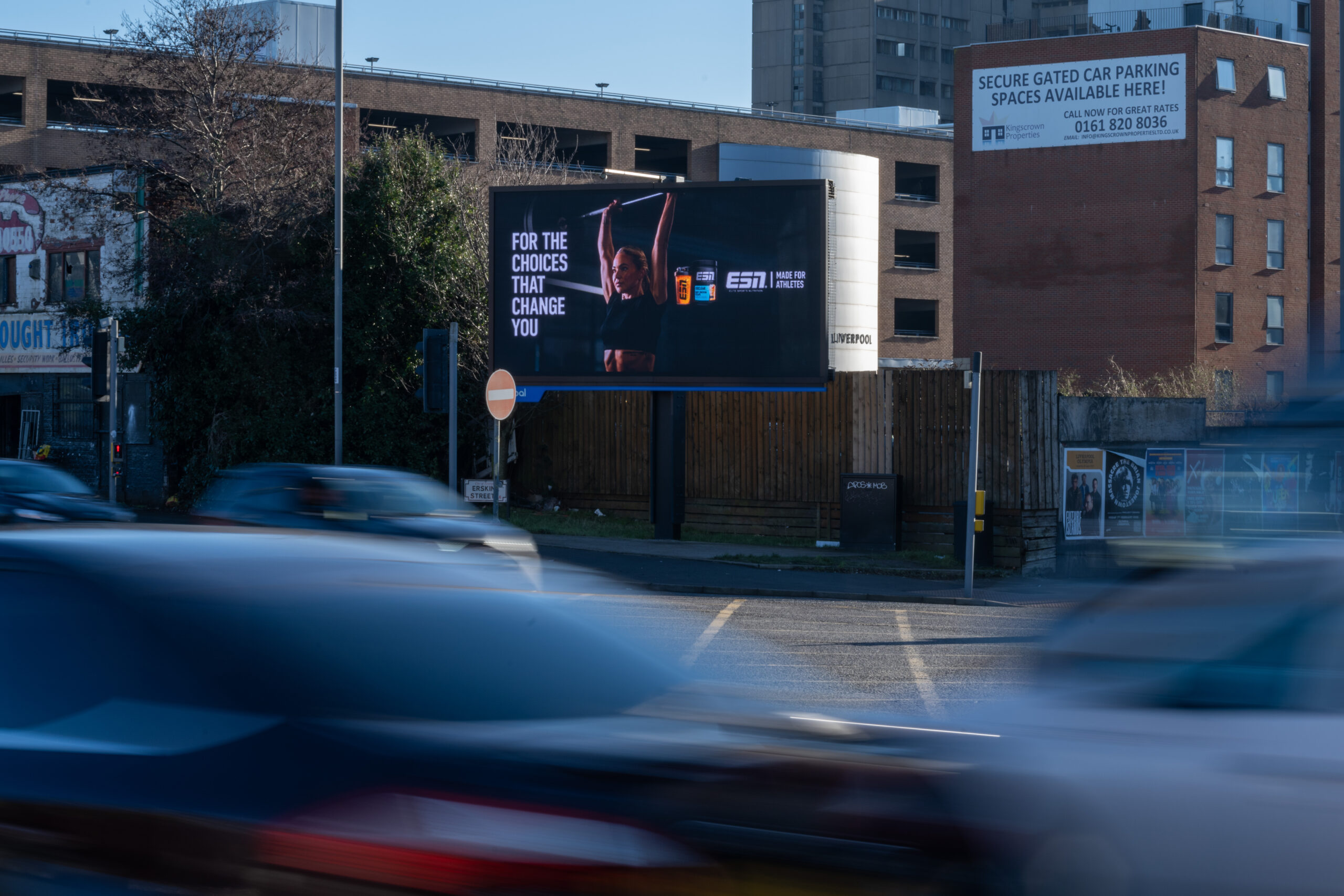
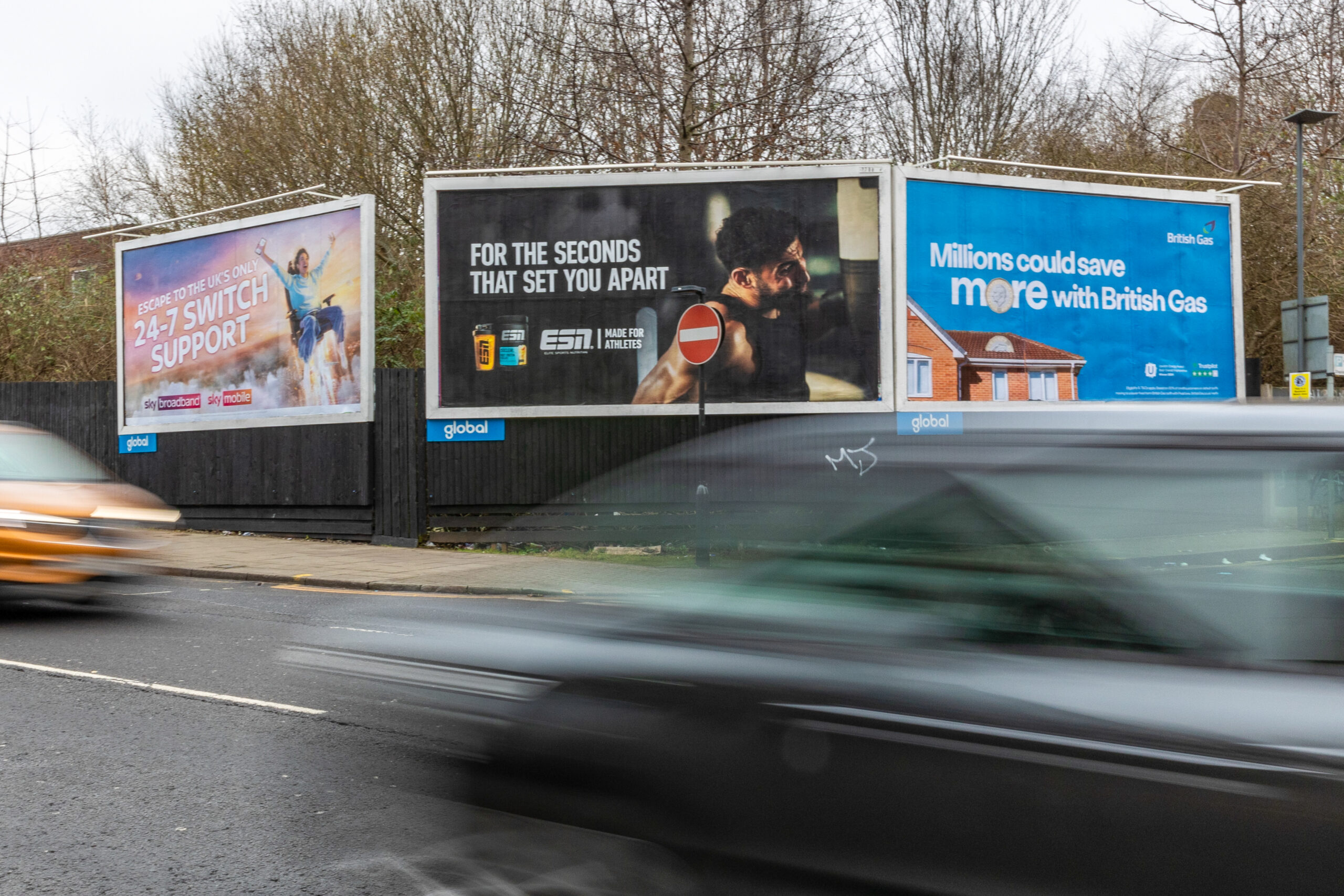
Static billboards are generally the most affordable option and work well for longer campaigns
Digital billboards cost more due to screen technology and shared rotation, but allow creative flexibility
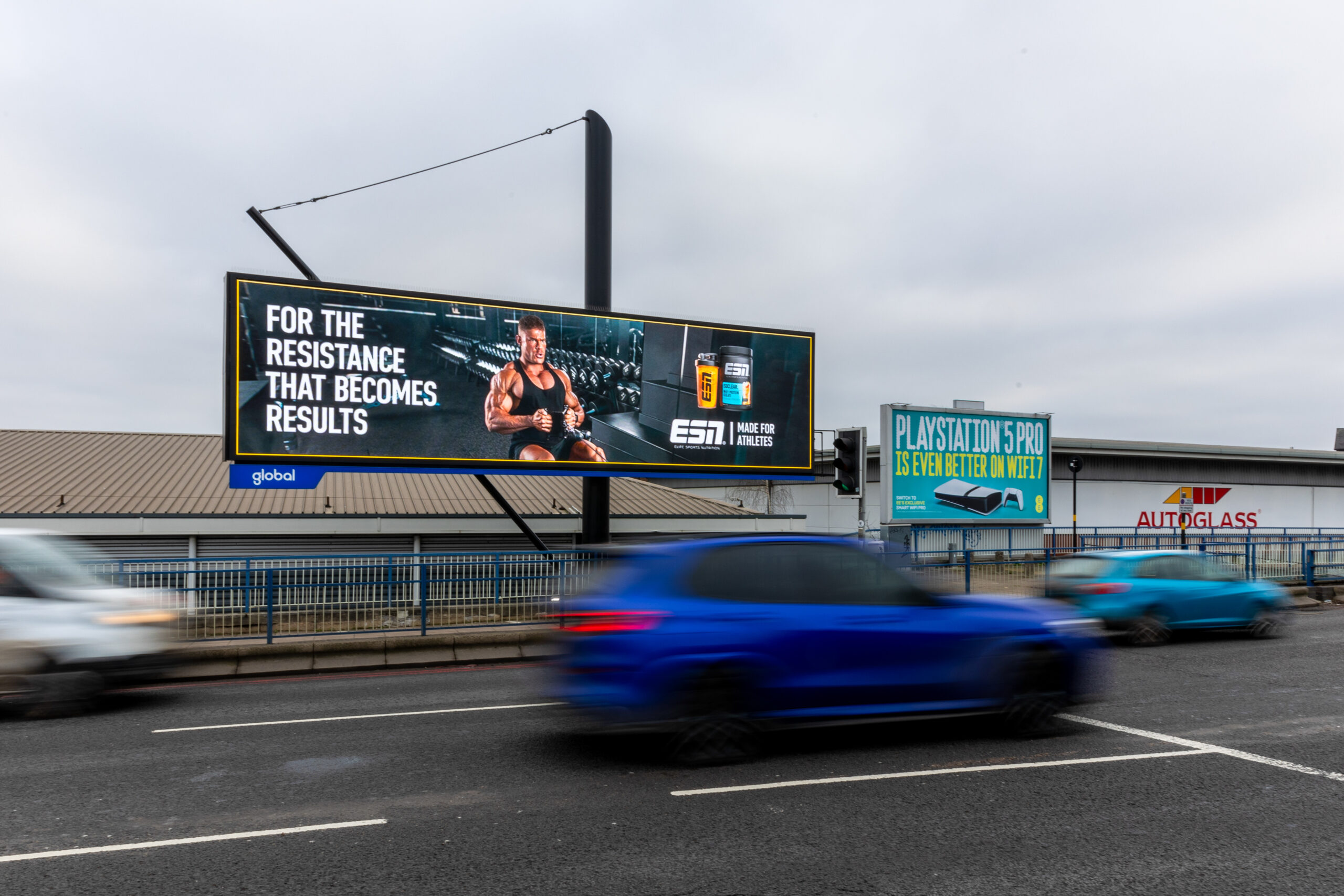
Large-format billboards command premium pricing because they dominate the visual environment
Importantly, “digital” doesn’t automatically mean better — it depends on what you’re trying to achieve.
Visibility and traffic
A billboard’s price reflects how likely people are to actually notice it.
Sites with:
Long viewing times
Clear sightlines
Slow-moving traffic or pedestrian flow
tend to cost more because they consistently deliver stronger exposure.
Traffic volumes and vehicle flow data, often sourced from Department for Transport statistics, play a key role in estimating how many people are likely to see a roadside billboard.
Campaign length
Longer bookings usually secure better weekly rates, particularly for static sites. Short, last-minute campaigns often cost more per week because availability is limited.
How share of voice (SOV) affects billboard advertising costs
On digital billboards, advertisers usually buy a share of voice (SOV) rather than exclusive use of the screen.
For example:
A 10% SOV means your advert appears roughly once every 10 slots
A 25% SOV means more frequent exposure and higher cost
A 100% SOV (exclusive use) is rare and priced at a premium
Higher SOVs cost more, but they also increase visibility and recall. For many campaigns, a balanced SOV delivers better value than paying for full exclusivity.
Billboard advertising costs by format (UK averages)
The table below shows typical weekly price ranges based on current UK campaigns.
| Billboard format | Typical weekly cost |
|---|---|
| Local roadside billboard | £200 – £800 |
| Urban 48-sheet billboard | £800 – £2,000 |
| Digital billboard | £1,500 – £5,000+ |
| Large-format billboard | £2,000 – £6,000+ |
These figures are indicative. Actual costs depend on location, demand and timing.
How much does a billboard cost in London compared to the rest of the UK?
London pricing sits in a category of its own.
Prime London billboards can cost more per week than an entire regional campaign
Major UK cities like Manchester, Birmingham and Leeds usually offer mid-range pricing
Smaller towns and commuter corridors provide lower entry points with strong local impact
A single digital billboard in a prime London zone can exceed £5,000 per week, while a well-placed regional static site might cost a fraction of that.
How billboard advertising is priced (and why it’s different to digital ads)
Unlike online advertising, billboard pricing isn’t based on clicks or impressions you can see in real time.
Instead, prices are influenced by:
Estimated audience reach
Traffic and footfall data
Visibility and dwell time
Site demand and availability
Campaign duration
This is why two similar-looking billboards can carry very different price tags — and why cheapest isn’t always best value.
Is billboard advertising worth the cost?
Billboard advertising tends to perform best when it’s used as a visibility and reinforcement channel, rather than a short-term performance tactic.
Brands often see the strongest results when billboards are used to:
Build brand awareness
Support launches or key moments
Reinforce digital and social campaigns
Increase trust and credibility at scale
Advertisers expecting instant, trackable leads often feel disappointed. Those focused on long-term brand impact usually see far better returns.
Audience reach estimates for UK billboard advertising are typically based on industry-standard measurement provided by Route, the UK’s out-of-home audience measurement body.
What is a billboard rate card?
A rate card is a media owner’s standard list price for billboard sites. It shows the maximum price a placement could cost before any negotiation, discounts or availability adjustments.
In practice, most advertisers do not pay full rate card. Final prices are usually influenced by demand, booking length, seasonality and how the site fits into a wider campaign.
Billboard advertising cost FAQs
In the UK, billboard advertising typically costs between £200 and £5,000+ per week, depending on location, format and visibility.
Most UK campaigns sit between £800 and £3,000 per week. In practice, that usually means a strong regional site or a share of voice on a digital screen rather than a single premium London location.
A single billboard site can cost anywhere from a few hundred pounds per week for local placements to several thousand pounds per week for high-demand urban or digital sites.
Monthly costs are typically calculated by multiplying weekly rates by four. A £1,000-per-week billboard would usually cost around £4,000 per month.
Smaller businesses can access billboard advertising from £200–£500 per week in regional areas, making outdoor advertising more accessible than many people assume.
Absolutely. 6-sheet bus shelter ads are one of the most cost-effective OOH formats, making them accessible for restaurants, gyms, retailers and local service businesses.
Final thoughts on billboard advertising prices
Billboard advertising costs aren’t arbitrary, but they are highly dependent on context. Location, visibility, format and campaign strategy all play a role in determining price, and value.
Understanding what you’re actually paying for makes it far easier to choose placements that deliver real impact, rather than simply opting for the cheapest option on paper.
If you’re weighing up billboard advertising against other channels, it’s worth looking beyond upfront cost and considering reach, longevity and brand effect over time.